






 Back to blog home
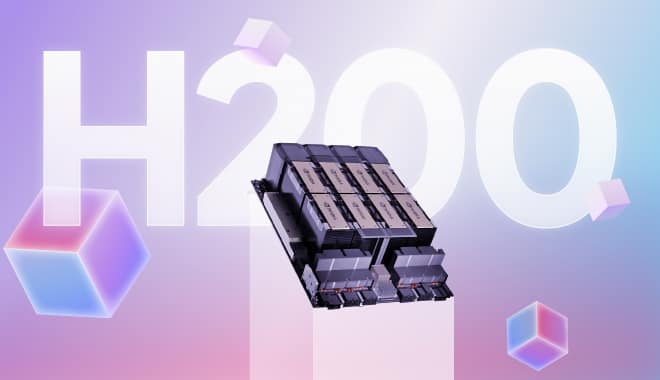
If you’re exploring GPUs for AI workloads in India, you’ve likely heard of the NVIDIA H200. It’s one of the most powerful accelerators available today, designed specifically for large-scale AI use cases such as long-context LLM training, multi-modal inference, and real-time RAG pipelines.
But here’s the real question: should you buy the H200 outright or opt for renting it via AI cloud providers in India? The answer depends on your team’s scale, timeline, compliance requirements, and financial structure. That said, for most AI teams in India—especially startups, research labs, AI-native or enterprises—renting is the more flexible and cost-efficient approach. Let’s explore why in detail.
If you’re short on time, here’s the summary of H200 price in India:
| Access Type | Pricing | Commitment | Ideal For | Pros | Cons |
| Pay-as-You-Go | $3.4 – $13.8 per hour | None (on-demand) | Startups, researchers, short-term experiments | No CapEx, instant scalability, flexible billing | Higher cost for long-term usage |
| Monthly Reserved | ~$2,940 per GPU/month | Monthly contract | Teams running 24/7 or recurring training jobs | Lower effective hourly cost, guaranteed throughput | Requires upfront monthly commitment |
| On-Premise | $29,400 – $35,300 per unit | Long-term (CapEx) | Enterprises with compliance needs or owned infra | Full control, no dependency on cloud availability | High upfront cost, infra/setup overhead, slower to scale |
What Makes the H200 So Valuable?
The H200 stands out primarily because of its high memory capacity, bandwidth, and precision capabilities. It is equipped with 141 GB of HBM3e memory, which enables smoother training of long-sequence LLMs and complex, multi-modal models. The 4.8 TB/s memory bandwidth significantly reduces bottlenecks for data movement across layers and accelerates batch throughput during training.
Moreover, the inclusion of FP8 precision support via NVIDIA’s Transformer Engine makes the H200 ideal for training and inference of large-scale transformer models. FP8 offers a balance between computational efficiency and model accuracy, helping teams reduce training time and infrastructure costs without sacrificing performance. This makes the H200 particularly suitable for teams building GenAI assistants, domain-specific foundation models, or real-time retrieval-based systems, including those exploring scalable open-source alternatives like our GPT OSS model.
3 Ways to Access H200 in India
Option 1: Cloud-Based (Pay-as-You-Go)
For many teams, accessing the H200 through cloud-based, pay-as-you-go plans offers the best blend of flexibility, scalability, and cost predictability. This approach works especially well for model experimentation, batch inference jobs, or scaling up during training bursts without committing to long-term infrastructure.
Option 2: Reserved GPU Plans (Monthly)
For teams that have stable, ongoing compute needs—such as 24/7 fine-tuning, retraining foundational models, or maintaining AI inference endpoints—reserved monthly access provides more predictability and cost efficiency. These plans are typically priced at ~$2,940/month per GPU in India and include guaranteed throughput, SLA-backed uptime, and priority support.
In these models, cloud providers also offer access to dashboards for GPU usage, health monitoring, and workload orchestration. These plans often allow vertical scaling and are especially useful for teams managing production-grade GenAI systems.
Option 3: On-Premise Purchase
Some enterprise teams, especially those constrained by compliance, data residency, or long-term budgeting models, may consider owning the H200 via direct purchase. However, the process is neither quick nor simple.
Buying an H200 outright in India involves an upfront investment between $29,400–$35,300 per unit. Beyond that, the total cost of ownership includes investment in compatible high-efficiency cooling systems, redundant power supply, compatible server chassis (typically 2U+), and skilled personnel to manage and monitor infrastructure. Lead times currently range between 6 to 8 weeks, due to global supply chain constraints and import documentation.
While ownership provides complete control over infra and compliance assurance, it adds significant friction in terms of scalability, upgrades, and ongoing maintenance. For most AI-native teams, the cloud-based access model still delivers better agility and faster time-to-value.
Where to Get H200 Access in India
Neysa Velocis: India’s AI Acceleration Cloud System
Neysa Velocis stands apart from generic cloud providers by positioning itself as a full-stack AI Acceleration Cloud System. Unlike standard GPU cloud vendors that merely rent out compute, Neysa Velocis integrates the GPU layer with orchestration tooling, observability features, pre-configured containers, and seamless workload migration support.
With pricing starting at $3.4/hr, Neysa Velocis allows access to H200 in both fractional (shared GPU) and full-dedicated modes. Their stack comes preloaded with PyTorch, TensorFlow, and Hugging Face libraries, making it frictionless for ML engineers and researchers to get started. Moreover, Neysa includes usage analytics, migration workflows from H100/A100, and job-level GPU performance dashboards—critical for fine-tuning resource allocation.
For teams deploying retrieval-augmented generation, transformer-based multi-modal models, or experimenting with longer context window LLMs, Neysa’s infrastructure design and pricing provide a robust, production-grade platform without lock-in or infra headaches.
Other Providers (Renting Models)
- E2E Cloud – Starts ~$6.9/hr; limited H200 availability
- Akash Networks – Decentralized GPU marketplace; pricing varies
- CoreWeave / Lambda / Vultr – International players; USD billing
Buying via Distributors
- Tata Vayu – Limited enterprise supply; support included
- Local vendors – Hardware delivery + infra required
Factors That Impact H200 Price in India
Several variables influence the cost of accessing an H200 GPU, particularly in cloud environments. The most prominent factor is the vCPU and RAM pairing offered with the GPU instance. Higher vCPU counts and larger memory allocations naturally increase hourly rates, especially for training scenarios involving large models and datasets.
Geographic cloud region is another key variable. GPUs provisioned in India may have lower per-hour pricing compared to global regions like Singapore or Europe due to availability constraints, power costs, and taxation. Additionally, network latency plays a role—particularly for distributed training jobs or real-time AI endpoints—so regional provisioning decisions must balance cost against performance.
SLA tiers also matter. Basic plans may come with limited support or shared tenancy, while enterprise-grade SLAs often include guaranteed uptime, proactive monitoring, and lower fault tolerance thresholds. Choosing between dedicated vs shared GPU access further affects cost—dedicated access ensures full memory and compute isolation, while shared instances offer fractional access at lower rates but with variable performance.
Finally, the bundled ecosystem—such as availability of pre-installed frameworks, support for Jupyter Notebooks, container orchestration, and security tooling—can justify higher pricing if it accelerates productivity or reduces devops overhead.
Alternatives? Just Know They Exist
While the NVIDIA H200 is currently the most balanced GPU for AI acceleration in India, it’s worth knowing what else is out there—especially if you’re working on specific niche workloads.
- NVIDIA H100 is still widely used for LLMs up to 65B parameters, fine-tuning, and multi-GPU inference. It has 80 GB of HBM3 memory and 3.35 TB/s bandwidth. It’s a mature option, ideal for teams optimizing for price-performance over absolute speed.
- NVIDIA H200 (as covered) is better suited for longer context windows, larger batch sizes, and training RAG models due to its enhanced memory and FP8 precision. It’s especially valuable for Indian teams doing cutting-edge GenAI research or productionizing LLMs.
- AMD Instinct MI300X offers a strong alternative for pure training workloads. It has 192 GB of HBM3 memory and competes closely with H200 in batch throughput. However, ecosystem support and library compatibility are still maturing.
- Intel Gaudi 2 is a cost-efficient alternative optimized for deep learning training and inference. It suits teams that are budget-conscious but still require substantial compute for supervised learning or traditional NLP/CV models.
- Google TPU v5e is designed for cloud-native teams building models within Google Cloud’s ecosystem. It supports LLM training but offers less flexibility outside TensorFlow.
- Graphcore IPU is designed with a unique architecture for AI workloads. While it excels in specific parallel computation tasks, the ecosystem is smaller and may require reengineering of workflows.
Neysa Velocis offers pathways to explore some of these alternatives, depending on workload and ecosystem fit.
Final Verdict: Rent, Don’t Buy
Unless you’re building an internal AI infrastructure team, managing your own data center, or are under strict sovereignty constraints, renting H200 GPUs through a robust AI cloud system like Neysa Velocis makes more sense. The economics, time-to-deploy, and ecosystem tooling all lean toward the OPEX model.
Neysa Velocis helps teams get into production faster by eliminating the bottlenecks of infra procurement, job scheduling, versioning, and model deployment. With observability baked into the stack, integrated orchestration, and containerized environments ready to go, ML and LLMOps engineers can focus on innovation rather than infrastructure.
Whether you’re a startup racing to product-market fit or an enterprise building vertical GenAI products, Neysa’s AI infrastructure helps you move faster, scale predictably, and avoid upfront costs.



![HPC Architecture (High Performance Computing) Â – Everything You Need to Know [2026]](https://ml0khbpkjbsx.i.optimole.com/cb:KhBH.b09/w:640/h:300/q:mauto/f:best/https://neysa.wpwebsite.pro/wp-content/uploads/2025/01/hpc-architecture.jpg)


