





 Back to blog home
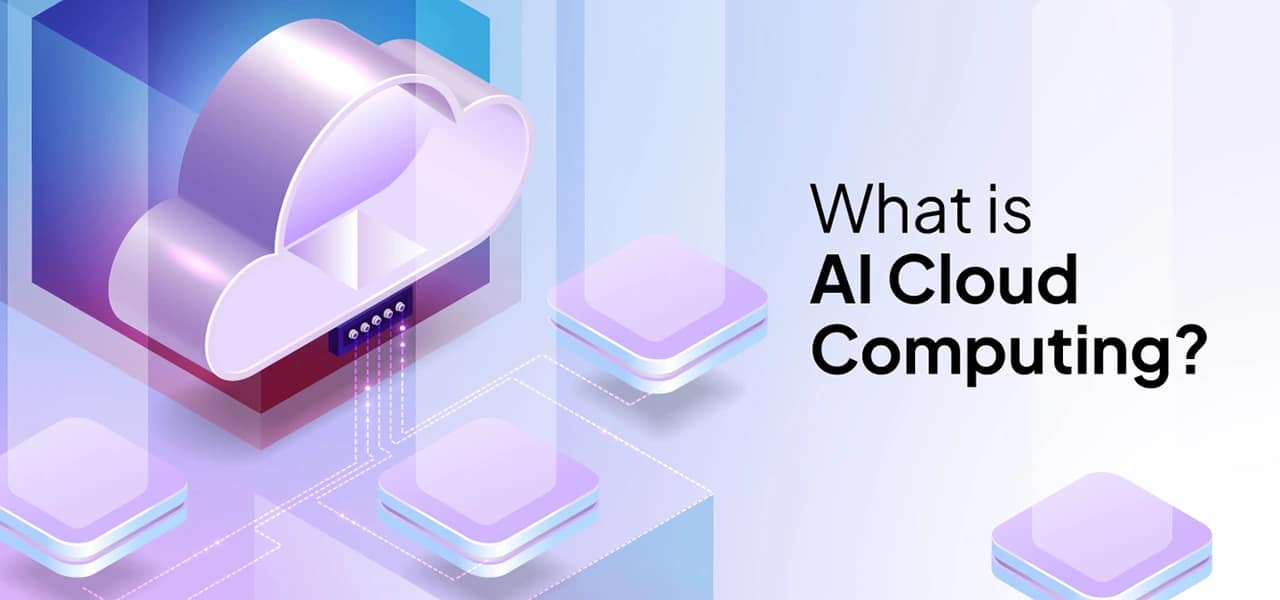
What is AI cloud computing?
AI cloud computing involves the delivery of AI capabilities and services through cloud infrastructure. This includes machine learning models, natural language processing (NLP) services, computer vision, and other AI applications that are hosted and accessed via the cloud.
The benefits of AI cloud computing include scalability, cost efficiency, accessibility, advanced AI capabilities, and enhanced security and compliance.
AI cloud computing represents a transformative synergy between artificial intelligence (AI) and cloud computing technologies. By integrating AI capabilities into scalable cloud infrastructures, businesses can access advanced tools, models, and computational resources without the need for significant upfront investments.
This blog delves into the multifaceted realm of AI cloud computing, exploring its benefits, challenges, leading platforms, and emerging trends. While maintaining a neutral perspective, we also highlight how AI cloud platforms like Neysa Velocis position themselves within this evolving landscape.
Understanding AI Cloud Computing
The Convergence of AI and Cloud Computing
Artificial intelligence (AI) and cloud computing are two of the most impactful technological innovations of the 21st century. Their convergence has given rise to AI cloud computing—a domain that enables organizations to harness AI’s potential through flexible, scalable, and cost-effective cloud infrastructures. This paradigm shift is reshaping industries by democratizing access to cutting-edge AI tools and fostering innovation across sectors such as healthcare, finance, retail, manufacturing, and logistics.
Moreover, the integration of AI into cloud platforms offers unprecedented opportunities for businesses to scale their operations while optimizing costs. By leveraging pre-built AI services hosted on the cloud—such as machine learning models, natural language processing (NLP), and computer vision—companies can accelerate their digital transformation journeys. However, this transition is not without challenges; issues such as data privacy, integration complexities, and skill gaps remain significant hurdles.
Core Components of AI Cloud Computing
AI cloud computing integrates several key components that collectively enable the development and deployment of AI applications:
- AI Models: These include pre-trained models for tasks such as image recognition, speech-to-text conversion, language translation, and custom-built models tailored to specific use cases.
- Data Storage and Management: Cloud platforms provide scalable storage solutions for the massive datasets required for training and inference in AI applications.
- Compute Resources: High Performance Computing (HPC) clusters equipped with GPUs (Graphic Processing Units) and TPUs (Tensor Processing Units) deliver the computational power needed for complex AI workloads.
- AI Development Tools: Frameworks like TensorFlow, PyTorch, and Keras facilitate the creation of machine learning models while integrated development environments (IDEs) streamline the development process.
- Pre-Built AI Services: Leading providers offer read-to-use inference-as-a-service for NLP, computer vision, predictive analytics and more.
Additionally, many platforms now offer AI infrastructure services that combine compute, storage, and orchestration layers to simplify the deployment and management of AI workloads across environments.
Benefits of AI Cloud Computing
1. Scalability and Flexibility
Cloud platforms enable businesses to dynamically scale resources based on workload demands. This elasticity ensures cost efficiency while accommodating fluctuating computational needs.
2. Cost Efficiency
The pay-as-you-go pricing model eliminates the need for substantial upfront investments in hardware and software. Businesses can optimize costs further by leveraging pricing tiers or discounts offered by AI cloud providers.
3. Accessibility and Collaboration
Cloud-based AI tools facilitate remote collaboration among teams distributed across geographies. Real-time access to shared resources enhances productivity in today’s increasingly remote work culture.
4. Advanced AI Capabilities
Providers continuously update their offerings with state-of-the-art features such as automated machine learning (AutoML), deep learning frameworks, and domain-specific APIs. This allows you to quickly integrate AI into your applications without much development work
5. Security and Compliance
For any AI deployment, security and compliance are crucial factors to consider. Cloud providers implement robust security measures—including encryption protocols and access controls—to safeguard sensitive data. Compliance with industry standards such as GDPR or HIPAA ensures regulatory adherence.
Industry Specific Applications Enabled by AI Cloud
1. Healthcare
AI in healthcare is revolutionising patient care, medical research and admin processes. AI cloud computing powers diagnostic tools to analyse medical images such as X-rays and MRIs and can detect diseases such as cancer and heart-related illnesses with much more precision. They also allow remote monitoring of patients, customised treatment plans and predictive analysis for disease outbreaks.
It can also optimise admin tasks such as record management and billing.
2. Finance
AI cloud computing is allowing the finance industry to optimise decision-making, risk management and customer experience. AI algorithms are equipped to evaluate large data to identify any pattern or trends that serve as valuable insights for investment strategies and even fraud detection. For example, AI in insurance can allow insurers to recognise any untoward patterns in client behaviour, or provide better-customised health policies based on the customer’s health data received from their IoT devices.
3. Retail
Customer satisfaction and engagement are paramount in the retail sector. AI cloud computing allows businesses to understand their customers better by analysing behavioural patterns and providing personalised product recommendations. AI is also enabling dynamic pricing strategies, inventory management and demand forecasting.
You can also leverage it to conduct sentiment analysis, and feedback analysis and engage chatbots that enhance the shopping experience.
4. Manufacturing
AI cloud computing allows manufacturing businesses to optimise most of their production processes, enhance quality control and reduce downtime. Predictive analysis powered by AI can analyse data from sensors and equipment to flag any discrepancies before they result in failures. Being cloud-based also enables real-time monitoring and assessment of production lines to ensure enhanced performance and efficiency.
5. Transportation and Logistics
AI in logistics is transforming the industry by enhancing route planning, increasing safety and optimising fleet management. AI cloud computing allows algorithms to analyse traffic patterns, weather conditions and delivery schedules to ascertain the best routes available in real time. It also enables vehicle and shipment tracking offering transparency and control over logistical operations.
It can also provide predictive maintenance for vehicles, minimising breakdowns and accidents.
AI Cloud Computing Platforms
Several cloud providers offer AI cloud computing platforms that provide a wide range of tools and services for AI development and deployment. Let’s explore some of the leading platforms:
Neysa Velocis
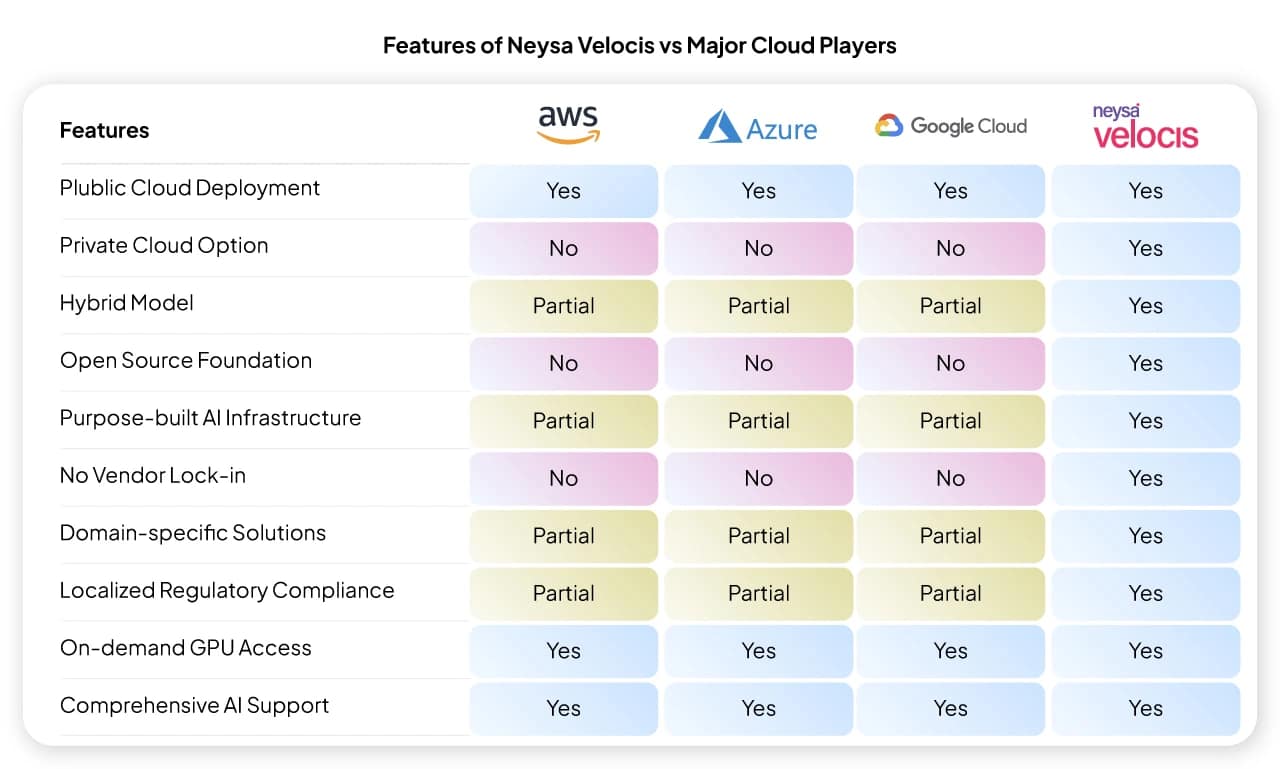
Neysa differentiates itself by focusing on cost efficiency and purpose-built infrastructure optimized for specific domains such as banking, financial services, insurance and media production. In the ongoing comparison of AI Neocloud vs Hyperscalers, Neysa Velocis stands out by delivering total cost savings of 40–60% compared to major hyperscalers, making it an ideal choice for organizations seeking affordable yet high-performance solutions. It also offers GPU as a Service (GPUaaS) to support demanding AI and compute-intensive workloads.
Amazon Web Services (AWS)
AWS is renowned for its extensive suite of cloud services tailored to various industries. Its flagship AI offering—Amazon SageMaker—simplifies model development by providing tools for data labeling, training, tuning, and deployment. AWS excels in scalability and global reach but may be costlier compared to other platforms.
Microsoft Azure
Azure integrates seamlessly with Microsoft’s ecosystem (e.g., Office 365), making it an attractive choice for enterprises already using Microsoft products. Azure Machine Learning offers robust tools for building predictive models while its hybrid capabilities support diverse deployment scenarios.
Google Cloud Platform (GCP)
GCP stands out for its leadership in data analytics through tools like BigQuery. Its Vertex AI platform provides a unified environment for training and deploying machine learning models. GCP’s emphasis on sustainability resonates with eco-conscious businesses.
Challenges of AI Cloud Computing
1. Data Privacy and Security
Securing data is one of the key concerns for any business when investing in AI cloud computing. You must ensure that your data is safe from any unauthorised access or breaches. Although cloud providers implement a variety of security measures such as encryption and access controls; you must always stay vigilant. You can also take some extra precautions by installing additional tools to secure your AI cloud computing environments.
2. Integration with Existing Systems
Despite being much easier than installing an onsite AI infrastructure; AI cloud computing too has a fair amount of integration work to be done to synergise with the rest of your application and infrastructure systems. This may require some custom development and middleware solutions to efficiently integrate your new AI systems.
3. Skill Gaps and Expertise
AI cloud computing requires specialised skills and expertise in areas such as machine learning, data science, and AI cloud infrastructure management. You may face challenges finding and retaining qualified professionals to develop, deploy, and manage AI solutions. To address this, you can invest in training programs, collaborate with external partners, or leverage managed AI services offered by cloud providers.
4. Cost Management
While AI cloud computing can be cost-efficient, managing costs effectively requires careful planning, deployment and monitoring. Organisations must track their usage of cloud resources, optimise their resource allocation, and leverage pricing models that align with their needs. Additionally, organisations should implement cost-saving strategies, such as scheduling workloads during off-peak hours and using reserved instances, to minimise expenses.
The upfront cost of AI cloud computing isn’t exponential, but you need to be wise about managing the finances to ensure a predictable Total Cost of Ownership and RoI.
Future Trends in AI Cloud Computing
1. Edge AI
Edge AI involves running AI algorithms on edge devices, such as IoT sensors, smartphones, and gateways, closer to the data source. This approach reduces latency, conserves bandwidth, and enables real-time processing. As edge computing continues to advance, we can expect to see more AI workloads being processed at the edge, complementing cloud-based AI solutions.
2. Federated Learning
Federated learning is a collaborative machine learning approach where multiple devices or organisations train a shared model without sharing their data. This approach enhances data privacy and security while allowing organisations to benefit from collective learning. Federated learning is expected to gain traction in industries with strict data privacy regulations, such as healthcare and finance.
3. Quantum AI
Leveraging the power of quantum computing, this advanced approach tackles complex AI problems that classical computers struggle to solve. With the ability to perform computations at unprecedented speeds, it paves the way for breakthroughs in optimisation, cryptography, and material science. While still in its early stages, quantum AI holds the potential to revolutionise AI cloud computing in the coming years.
Conclusion
AI cloud computing is revolutionising how enterprises leverage AI capabilities to drive innovation, enhance decision-making, and improve efficiency. By integrating AI services within cloud environments, businesses can access powerful tools and resources without the need for significant upfront investments in infrastructure. The benefits of AI cloud computing, such as scalability, cost efficiency, accessibility, advanced capabilities, and security, make it a compelling choice for businesses across various industries.